


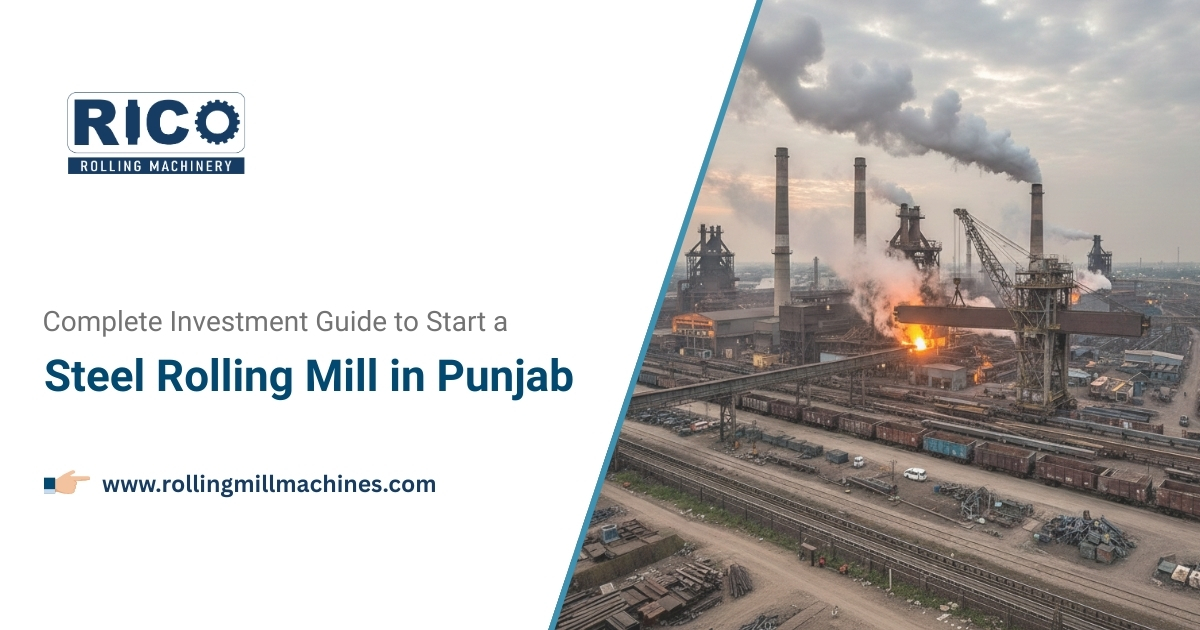
Punjab is one of India’s strongest hubs for steel manufacturing and processing. Cities like Ludhiana, Mandi Gobindgarh, and Jalandhar have developed large clusters of steel industries including induction furnaces, rolling mills, and steel fabrication units. Because of this ecosystem, many entrepreneurs and industrial investors consider Punjab an ideal location to start a steel rolling mill plant.
If you are planning to enter the steel manufacturing sector, understanding the investment requirements, machinery, licenses, and operational costs is extremely important. This guide explains everything you need to know before setting up a steel rolling mill plant in Punjab.
Why Punjab Is Ideal for a Steel Rolling Mill
Punjab has long been known as the “Steel Town of North India”, particularly the city of Mandi Gobindgarh which hosts hundreds of steel industries. Several factors make the state suitable for rolling mill businesses:
- Strong supply chain for steel billets and scrap
- Availability of skilled labor in steel manufacturing
- Good road and rail transportation networks
- Presence of supporting industries like furnace manufacturers and machinery suppliers
- High demand for steel products in construction and infrastructure
Industrial cities such as Ludhiana and Jalandhar also provide excellent industrial infrastructure and supplier networks.
What Is a Steel Rolling Mill Plant?
A steel rolling mill plant is a manufacturing facility where steel billets or ingots are heated and passed through rollers to produce finished steel products. The rolling process changes the shape and thickness of steel while improving its mechanical properties.
Common products produced by rolling mills include:
- TMT bars
- Round bars
- Wire rods
- Angles and channels
- Flats and structural steel
These products are widely used in construction, infrastructure development, machinery manufacturing, and engineering projects.
Types of Rolling Mills You Can Start
Before investing, you should decide the type of rolling mill plant you want to establish.
1. TMT Bar Rolling Mill
This type of plant produces thermo-mechanically treated bars used in construction projects.
2. Structural Rolling Mill
Structural mills manufacture angles, channels, and beams used in industrial and building structures.
3. Wire Rod Rolling Mill
These plants produce wire rods used in manufacturing wires, fasteners, and nails.
4. Mini Rolling Mill
Mini rolling mills are smaller plants with lower investment and limited production capacity.
Choosing the right type depends on your investment capacity, market demand, and production goals.
Land Requirement for a Rolling Mill Plant
The land requirement depends on plant capacity and machinery layout.
Typical land requirements include:
- Small rolling mill: 1–2 acres
- Medium capacity plant: 3–5 acres
- Large industrial rolling mill: 5–10 acres
The land should preferably be located in an industrial zone to simplify licensing and utilities such as electricity and water supply.
Machinery Required for a Rolling Mill Plant
A steel rolling mill plant requires several machines that work together to complete the rolling process.
Major Machinery Components
- Reheating Furnace
- Rolling Mill Stands
- Pinch Rolls
- Shearing Machine
- Cooling Bed
- Gearbox and Drives
- Conveyor Systems
- Automation and Control Systems
Modern plants also include PLC automation and energy-efficient equipment to improve productivity and reduce operational costs.
Estimated Investment for a Steel Rolling Mill in Punjab
The investment required varies depending on plant capacity, automation level, and product type.
Approximate investment range:
| Plant Type | Estimated Investment |
| Mini Rolling Mill | ₹5 Crore – ₹10 Crore |
| Medium Capacity Plant | ₹10 Crore – ₹30 Crore |
| Large Automatic Rolling Mill | ₹30 Crore – ₹70 Crore+ |
The investment includes:
- Land and building construction
- Machinery and equipment
- Installation and commissioning
- Power infrastructure
- Working capital
Actual costs may vary depending on the technology used and the scale of operations.
Licenses Required to Start a Rolling Mill
Before starting operations, several registrations and approvals are required.
Common licenses include:
- Business registration (Private Limited / LLP / Partnership)
- GST registration
- Factory license
- Pollution Control Board clearance
- Electricity connection approval
- Fire safety certificate
Compliance with environmental and safety regulations is essential for operating a steel manufacturing unit.
Power Requirement
Steel rolling mills require significant electrical power because of heavy machinery and reheating furnaces.
Typical power requirements:
- Small plant: 1500–3000 kW
- Medium plant: 3000–7000 kW
- Large plant: 7000 kW+
Many modern plants adopt energy-efficient technologies to reduce electricity consumption.
Workforce Requirement
A typical rolling mill plant requires a skilled workforce including:
- Mechanical engineers
- Furnace operators
- Machine operators
- Maintenance technicians
- Quality control staff
- Production supervisors
Punjab has a strong industrial workforce, making it easier to hire experienced workers for steel plants.
Profit Potential in the Rolling Mill Business
The rolling mill industry can be highly profitable if managed efficiently. Profitability depends on several factors:
- Raw material cost (steel billets)
- Electricity consumption
- Production efficiency
- Market demand for steel products
- Operational management
With efficient machinery and optimized production, rolling mills can achieve good profit margins in the steel manufacturing sector.
Key Challenges in the Rolling Mill Industry
Before investing, it is important to understand the challenges involved:
- High electricity costs
- Fluctuating raw material prices
- Equipment maintenance
- Environmental regulations
- Market competition
Proper planning, advanced machinery, and experienced management can help overcome these challenges.
Tips for Successful Rolling Mill Investment
To ensure long-term success in the rolling mill business, consider the following strategies:
- Choose a reliable machinery manufacturer
- Invest in energy-efficient equipment
- Focus on automation and modern technology
- Maintain strong supply chain relationships
- Implement strict quality control standards
These practices help improve productivity and maintain consistent product quality.
Conclusion
Punjab offers excellent opportunities for entrepreneurs who want to invest in the steel manufacturing sector. With strong industrial infrastructure, skilled labor availability, and high demand for steel products, starting a steel rolling mill plant in Punjab can be a profitable venture.
However, success depends on proper planning, choosing the right machinery, and managing operational costs effectively. By understanding the investment requirements, machinery, licensing, and market demand, businesses can establish a strong and sustainable rolling mill operation in the region.